Skip to Content
Hare Krishna! Join us this Sunday for kirtan, class & prasādam. View Sunday Program!

What is Bhakti?

The Path of Pure Devotional Service


The Yoga of Love

Bhakti is a Sanskrit word that means "loving devotion" or "devotional service". It is the path of connecting with the Supreme Person, God (Sri Krishna), through heartfelt love and service. Unlike other paths that may focus on intellectual knowledge or physical discipline, Bhakti-yoga is centered on the relationship between the individual soul (jīva) and the Supreme Soul (Paramātmā).


The great sage Narada defines Bhakti in his Bhakti-sutras as "the most exalted, pure love for God", It is a continuous, selfless flow of love from our heart to the Lord, free from any desire for personal gain or reward.

I am not the body I wear; I am the soul within.

The Goal of Bhakti-yoga


What is the ultimate aim?

The ultimate goal of practicing Bhakti-yoga is to achieve Prema, which is pure, unadulterated love of God. This state of consciousness is the soul's original, constitutional position. By reawakening this dormant love, one transcends the material world of birth and death and enters the eternal, blissful, spiritual abode of the Lord.

It is not about merging into an impersonal void, but about perfecting a unique, loving relationship with Sri Krishna, the all-attractive Supreme Person.

How to Practice Bhakti: The Nine Processes


The Srimad-Bhagavatam outlines nine primary ways to engage in devotional service. A person can practice any one of these and make complete spiritual perfection.

śravaṇaṁ kīrtanaṁ viṣṇoḥ smaraṇaṁ pāda-sevanam
arcanam vandanaṁ dāsyaṁ sakhyam ātma-nivedanam

-Srimad-Bhagavatam 7.5.23


1. Śravaṇaṁ (Hearing)

 Hearing about the Lord's names, forms, qualities, and pastimes from authentic spiritual sources and realized devotees.

2. Kīrtanam (Chanting)

Glorifying the Lord by chanting His holy names, especially the Hare Krishna maha-mantra: Hare Kṛṣṇa, Hare Kṛṣṇa, Kṛṣṇa Kṛṣṇa, Hare Hare / Hare Rāma, Hare Rāma, Rāma Rāma, Hare Hare.

3. Smaraṇam (Remembering)

Constantly remembering the Lord and His divine activities throughout one's day.

4. Pāda-sevanam (Serving the Lotus Feet)

Serving the Deity form of the Lord in the temple or visiting holy places related to His pastimes.

5. Arcanam (Deity Worship)

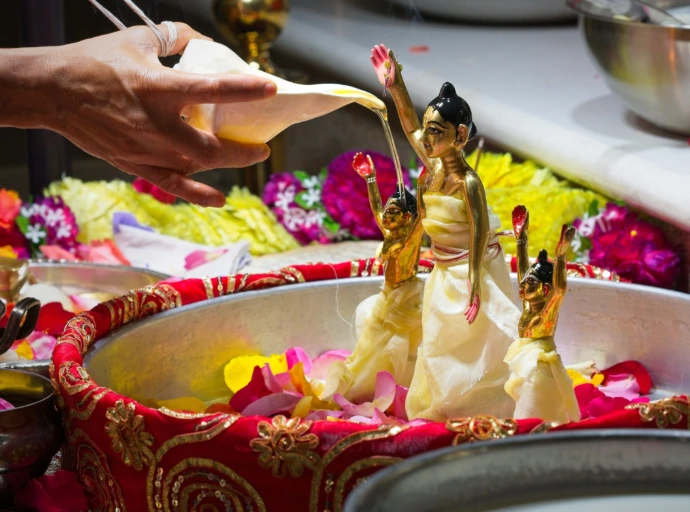
The regulated practice of worshipping the Deity form of the Lord with offerings like incense, flowers, and food.

6. Vandanam (Offering Prayers)

Offering humble and heartfelt prayers to the Lord.

7. Dāsyam (Becoming a Servant)

Considering oneself an eternal servant of the Lord and acting in that capacity.

8. Sakhyam (Becoming a Friend)

Developing a friendly, confidential relationship with the Lord.

9. Ātma-nivedanam (Complete Surrender)

Surrendering one's mind, body, and soul completely to the will of the Lord, having full faith in His protection.

The Four Regulative Principles: 
Pillars of Purity


To support a life of pure devotion, serious practitioners of Bhakti-yoga voluntarily accept four regulative principles. These principles help to create a foundation of purity and self-control, which is essential for steady spiritual progress.


1. No Meat-Eating

This includes abstaining from all meat, fish, and eggs. This principle is based on the law of karma and the virtue of compassion (ahimsa). Causing violence to other living beings creates severe karmic reactions and hardens the heart, making it difficult to develop divine love.

2. No Intoxication

This includes abstaining from alcohol, caffeine, nicotine, and other mind-altering substances. Intoxication clouds the mind, weakens the intelligence, and makes it impossible to focus on the subtle truths of spiritual life. Purity of consciousness is required for spiritual realization.

3. No Gambling

This includes all forms of gambling and speculative ventures. Gambling creates anxiety, greed, and dishonesty, which are all obstacles on the path of truth and devotion.

4. No Illicit Sex

This means restricting sexual activity to within a marriage, for the purpose of procreating and raising children in a spiritual atmosphere. Unregulated sensual indulgence binds one tightly to the material world and distracts the mind from higher spiritual goals.

Visiting the Temple

Here are some common questions about visiting the Temple


The temple is generally open for public visitation during morning āratī (7:30 AM) and evening āratī (7:00 PM), and for the full duration of our special weekend programs, particularly the Sunday Feast (starts 5:00 PM). Please check our Daily Schedule link for specific times and exceptions.

We ask that visitors dress modestly out of respect for the Deities. Please cover your shoulders, midriff, and legs (knee-length or longer is preferred). Simple, comfortable attire is best.

Yes, removing shoes before entering the temple room (and often the entire building) is a traditional sign of respect and cleanliness in Vedic culture. There are shoe racks provided in the lobby.

Philosophy and Practice

Here are some common questions about our Philosophy and Practice


Kīrtan is congregational singing of the Lord's holy names, primarily the Hare Kṛṣṇa Mahā-mantra. It is the recommended spiritual practice (Yuga-dharma) for the current age, purifying the heart and awakening devotion.

All spiritual programs, classes, and Kīrtans are free of charge. We welcome everyone, regardless of background or financial ability. We rely solely on the voluntary contributions of our community members.

While temple-cooked food (prasādam) is strictly vegetarian, guests are not required to be vegetarian. However, to fully participate in the spiritual activities, devotees follow a lacto-vegetarian diet (no meat, fish, or eggs) as a principle of non-violence (ahimsa).

In Vedic philosophy, food is classified according to the three modes of material nature (gunas): goodness (sattva), passion (rajas), and ignorance (tamas). The goal of devotional practice (Bhakti) is to elevate consciousness to the mode of pure goodness.

  • Onion and Garlic are classified as rajasic (passion) and tamasic (ignorance) foods.
  • Rajasic foods stimulate the body and mind, making quiet meditation and prayer difficult.
  • Tamasic foods, like old or spoiled food, or those that bring heavy mental states, are detrimental to spiritual progress.

Devotees avoid these and similar foods because they excite the lower passions and impede the mind’s ability to focus on spiritual practices, which require peaceful, calm consciousness. Furthermore, these items are never offered to the Deity, and devotees only eat food that has been offered (Prasādam).

Programs and 
Classes

Here are some common questions about our Programs and Classes


We host weekly classes dedicated to the Bhagavad-Gītā. Please check our Calendar or the Activities menu for the schedule of the Bhagwat Geeta Class.

Yes! We host a Sunday Vedic School program dedicated to teaching children the basics of Vedic culture, stories, and devotion through fun, interactive lessons. Registration details are available on the Activities page.

Ready to Begin the Journey?

The path of Bhakti begins with sincere inquiry. If you have questions about the goal of life or how to start your spiritual practice, we are here to guide you.

Ask A Question

Processing Seva...

Please wait while we process your donation